
Brake and Steering Guides
How to Identify Tractor Brake Parts: Brake Disc, Brake Piston, Brake Shoe and Seal Kit
To identify tractor brake parts, first separate the part type: brake disc, brake piston, brake shoe, brake pad, seal or seal kit. Then send the OEM number, photos of both sides, visible shape, measurements from the old part, machine model, serial number when available, quantity and country. Do not infer spline count, material or kit quantity from photos alone.
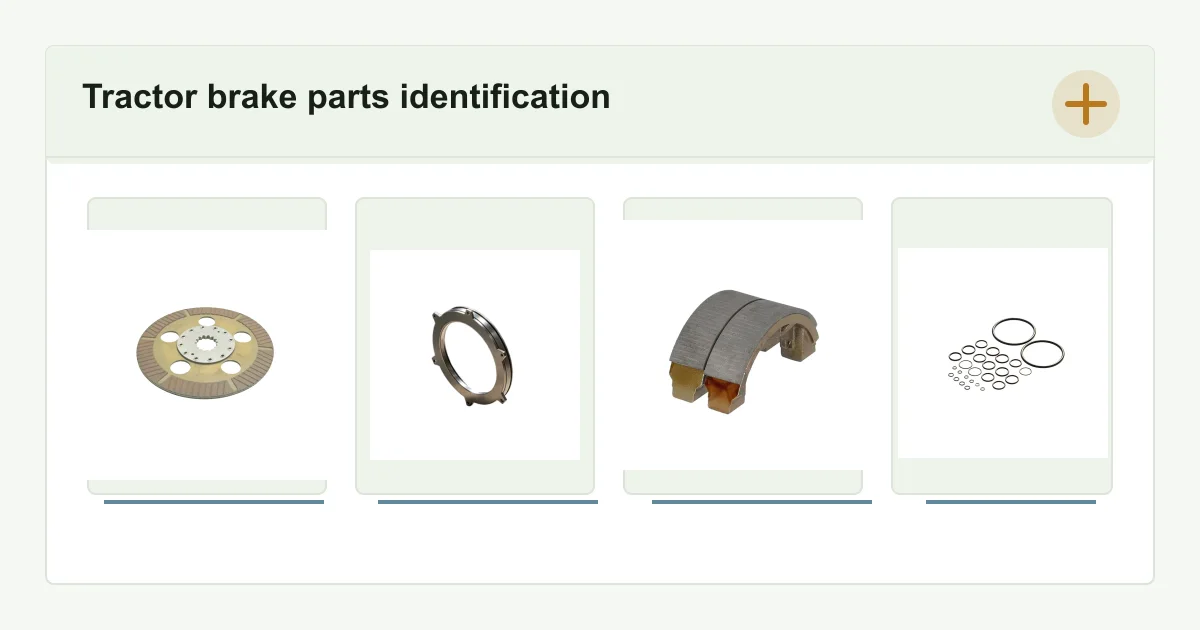
A request for tractor brake parts is too broad for accurate sourcing. Tractors may use different brake designs, and the words brake disc, brake shoe, brake pad, brake piston and brake seal kit describe different items. Start by naming the exact component and sending the OEM number if available.
ARGODAYA lists separate tractor brake part references such as AL111498 Brake Disc, L101856 Brake Piston, M805899 Brake Shoe and AT441786 Brake Disk Seal Kit. These are related examples, not a shared assembly claim.
Why is tractor brake part not a complete product description?
Brake systems can include discs, intermediate plates, pistons, shoes, pads, springs, seals, O-rings, boots, housings and kits. A buyer who sends only tractor brake part may receive follow-up questions before a quotation can be reviewed.
The first job is to separate product identity from machine application. Product identity means what the component is. Application means where it may fit, which can depend on model, serial number, axle, brake design or previous repairs.
How do I identify a tractor brake disc?
A brake disc is usually a flat friction or steel disc used in a disc-type brake arrangement. Identification starts with the OEM number, then photos of both faces, outside diameter, inside diameter or center opening, spline or tooth detail when visible, thickness measured from the old part, and any groove or plate arrangement.
Do not infer friction material, spline count or exact dimensions from an ARGODAYA product image. If the number is missing, send a ruler or caliper photo and a close-up of the center area.
How do I identify a tractor brake piston?
A brake piston may sit inside a brake housing or hydraulic brake arrangement. Useful details include the OEM number, front and rear photos, diameter from the old part, seal-groove photos, housing context and any related seal numbers found during disassembly.
If a piston has surface damage or corrosion, show it clearly, but do not rely on the damage photo alone. The shape, groove location and matching seal arrangement matter for identification.
How do I identify a tractor brake shoe?
A brake shoe is generally a curved component used against a drum or internal braking surface. To identify it, send the OEM number, photos of lining side and back side, overall arc shape, width, length along the shoe, pivot or anchor end, spring holes and any stamped marks.
Do not describe M805899 Brake Shoe as a pair or set unless the product evidence supports that package quantity. Multiple product photos do not prove quantity.
How do I identify a tractor brake seal kit?
A brake seal kit may contain seals, O-rings, boots or related sealing components for a brake piston, axle or brake disk housing. Start with the kit OEM number and old package if available. If the package is gone, photograph every removed seal next to a clean measuring reference and show where each seal was installed.
Kit contents should not be guessed. A product name such as AT441786 Brake Disk Seal Kit identifies the listed reference, but the public article should not invent the number of pieces or dimensions.
Brake disc, piston, shoe and seal-kit comparison
| Part type | Visible shape | Measurements to provide | Photos to provide | Common identification mistake |
|---|---|---|---|---|
| Brake disc | Flat disc or plate with center opening, teeth or spline area when present. | Outside diameter, center opening, thickness and spline or tooth count only from the old part. | Both faces, edge, center opening, markings and worn sample beside a ruler. | Assuming all discs for one tractor family share the same spline or thickness. |
| Brake piston | Round or shaped piston with seal grooves or machined faces. | Diameter, height and groove details when safely measured from the old part. | Front, rear, side, seal grooves and housing context. | Sending only a damaged face without showing the complete shape. |
| Brake shoe | Curved shoe with lining surface, web, anchor ends and spring holes. | Width, arc length, end shape and hole positions from the old shoe. | Lining side, back side, both ends, spring holes and any stamped number. | Calling it a brake pad or assuming a pair/set quantity. |
| Brake seal kit | Multiple seals, O-rings, boots or rings, or a packaged kit. | Seal ID, OD, thickness and profile only when measured from old pieces. | All pieces, package label, installed locations and related piston or housing. | Guessing kit contents from a product name or image. |
Is a tractor brake shoe the same as a brake pad?
No. In common parts language, a brake shoe is a curved component used in a drum-style or internal shoe arrangement, while a brake pad is usually a flatter friction component used with a caliper and rotor or disc system. Agricultural machinery wording can vary, so photos and OEM numbers are more reliable than names alone.
If you are not sure whether the old part is a shoe or pad, send photos of the complete brake assembly area and the removed component from both sides.
What should I send when the OEM number is missing?
- Photos of both sides of the old brake part.
- A close-up of any stamped, cast, printed or package number.
- Measurements taken from the old part, not estimated from a photo.
- Machine brand reference, model and serial number when available.
- Photos of the assembly position before removal if safe and practical.
- Quantity needed and destination country.
What are common ordering mistakes?
- Using tractor brake parts as the full product description.
- Confusing brake shoe and brake pad terminology.
- Ordering by model only without checking serial number or brake design.
- Inferring friction material, tooth count, dimensions or kit contents from photos.
- Assuming two brake references are interchangeable because they are in the same category.
Related ARGODAYA product references
Use Brake & Steering Parts to browse related references. This guide maps to AL111498 Brake Disc, L101856 Brake Piston, M805899 Brake Shoe, and AT441786 Brake Disk Seal Kit. For number searches, use OEM Lookup.
Sourcing inquiry CTA
Send the brake-part OEM number, photos of both sides, measurements from the old part, machine model, serial number when available, quantity and country. If the request covers several brake parts, list each item separately so disc, piston, shoe and seal-kit references are not mixed together.
Request a brake-parts review
Share the brake part number, both-side photos, measurements, machine model and quantity for inquiry review.
Send a brake-parts inquiryQuick Checklist
- Exact brake-part type
- OEM or part number
- Photos of both sides
- Measurements from the old part
- Machine model and serial number
- Quantity and country
Common Ordering Mistakes
- Using generic brake-part wording
- Confusing shoe and pad terms
- Guessing kit quantity
- Inferring dimensions from photos
Frequently Asked Questions
How do I identify tractor brake parts?
Separate the part type first, then send the OEM number, photos of both sides, measurements from the old part, machine model, serial number when available, quantity and country.
Is a tractor brake shoe the same as a brake pad?
No. A brake shoe is usually curved for a shoe or drum-style arrangement, while a brake pad is usually flatter for a caliper or disc-style arrangement. Photos help confirm the wording.
How do I measure a tractor brake disc?
Measure the old disc outside diameter, center opening, thickness and spline or tooth detail when present. Do not estimate these details from an online product photo.
What photos are needed for tractor brake parts?
Send both sides, edge or profile, markings, worn areas, mounting or assembly position, and a measurement reference when the OEM number is missing.
Source Notes
- Official and dealer catalog examples were used to confirm that brake systems list separate discs, pistons, shoes, seals and kits.
- ARGODAYA product examples are separate references and do not create new compatibility or interchangeability claims.
Send a parts inquiry
Include the OEM number, machine model, serial number, old part photos, quantity, and destination country for application review.